
Tips to improve SEO
Yes, No, Maybe

We are talking about the real prospect of recession.
Simply the Best - May Tax Madness

March and May are the only chances for the Madness heading, so I thought I'd get one in for this year.
Danger or Opportunity - Discover your online opportunities

While not all of us can "recession proof" our businesses, we can all maximize the opportunities at hand to generate more business either now or post lockdown.
Image Credit: https://hac.bard.edu/amor-mundi/learning-from-crisis-2013-02-25
Nuggets - not always earth shattering but worth a read

On a regular basis we get bits of information that aren't really earth shattering enough to send out as a complete newsletter, however they are interesting.
Accordingly I've decided to put together a regular newsletter that contains a few interesting segments.
This also means if you have something you think may be of interest, have a chat and we'll consider including it.
How to Use Google Posts for your Business
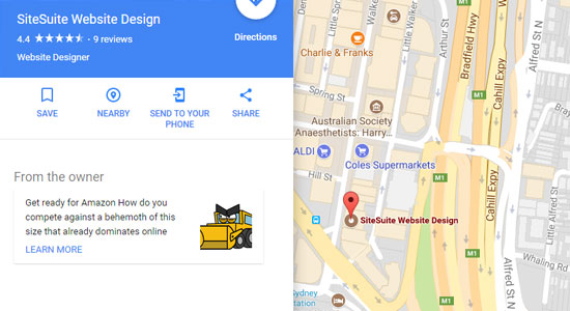
Google has recently opened up some space for posts on Google Maps.
Need for Speed

One of the ongoing challenges for both clients and ourselves is site loading speed. As people seek a richer experience online, they are also becoming more impatient in terms of getting where they want to online quickly. You only have to look at some of the major brand names like Snapchat and Instagram that came from nowhere in the last 10 years to get a sense of the cultural shift in expectations.
Why Websites Now Need SSL for SEO

For obvious reasons, one of the major global trends at the moment is tightening online security.
Top 10 SEO Tips
SEO (Search Engine Optimisation) is becoming crucial to ensure that your website is easily found, so today we've provided our Top 10 SEO Tips to help you get the best search results for your website.
When you are operating a business website, especially one with an online store, it is crucial that your site can be easily found. Just as bricks and mortar retail stores always try to get the best position with the highest pedestrian count, websites need to rank well in search engines to be successful.
This is where SEO (search engine optimisation) comes into the picture. Why is SEO so important? Well, SEO is one of the keys to the success of your online business.
Google Wants To Shoot Your Business
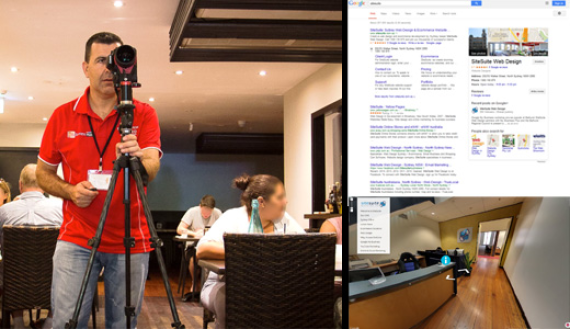
Over the last 12 to 18 months there have been numerous changes in the online marketing landscape. The majority of this change has been driven by Google as it endeavours to clean up a number of "fringe" SEO techniques that have been used to unfairly promote the search rankings of some businesses over others.
Don’t let your competitors win – it’s time to go mobile responsive!
Internet access from mobile devices is constantly increasing in Australia and in many other markets. Almost 69% consumers of the age group 25 to 34 go online with their mobile phones or tablets to send emails, connect with friends or shop online. That's a lot of people who are transferring their shopping experience from their desktop PCs to their iPhones, Android phones or iPads or other tablets. Are you ready for your mobile customers?
Google SEO Starter Guide
We find that many business owners are confused about where to start with optimising their websites, and not only are there a raft of online marketing activities that play a part in ensuring a website ranks well, there’s also plenty of conflicting advice going around.
Top Secret SEO Tips, aka “Waiter there’s a Hummingbird in my search”

Last week, the Google Hummingbird update was announced, and rather than just a normal algorithm update, this is a complete rewrite of the core ranking engine. The update heralds a fundamental change in online search that will impact on search for years to come; find out what you need to know about this update and how it might affect you.
A beginners guide to website search engine optimisation
“SEO is the process of improving the visibility of a website or web page in a search engine’s unpaid or ‘organic’ search results”
A beginners guide to SEO.
Search engine optimisation is a topic that is a mystery to many small business website owners and, given its reputation as a “dark art”, one that many choose not to engage with.
However, I read a very good analogy on another website recently, if you build a great website and then don’t bother to get it ranked on search engines, it’s a bit like having a beautiful brochure designed and printed, and then just locking them away in a cupboard!
The content of this blog have been drawn from one of our eBooks on SEO, and while I’ll publish the book in sections on the blog, I’ll link to it at the end of the blog if you’d like to download the whole eBook.
Google releases Penguin 4 update targeting link spam
Search engine optimisation (SEO) is an ever evolving discipline and Google regularly updates its search alogrithm to provide the most relevant and useful search results. As a consequence we, along with other SEO specialists, are constantly researching and reviewing changes in the SEO landscape to provide the best possible outcome for our clients.
Today Google confirmed that Penguin 4, with the new Penguin 2.0 algorithm, is now being rolled out.
How Search Works - website optimisation resource from Google
Google website ranking and search engine optimisation are often seen as mysterious crafts that are impenetrable to all but the geekiest amongst us. However, I came across a resource from Google recently called “How Search Works” that explains in very easy to understand terms many of the important considerations in ensuring your website ranks well.
- Product News (10)
- Ecommerce (19)
- Web Design (11)
- Digital Marketing (39)
- Website Content (24)
- Blogging (9)
- SEO (20)
- Getting Started (6)
- Social Media (10)
- The Guest Blog (10)
- Observations (2)
- Videos (5)
- Security (3)
Don't Miss Anything
Get email updates when the next blog is posted.
Ecommerce
Web Design & Development
Online Marketing
by SiteSuite
Everything you need for online success